Showing posts with label Geoff Duncan. Show all posts

Monday, May 11, 2026

Perdue Switched Parties and Got a Crown. Duncan Switches and Gets a Crossfire.

Georgia politics


has seen party‑switchers before, but the reaction hasn’t always looked like what we’re watching now. When Sonny Perdue left the Democratic Party in 1998 and crossed over to the GOP, he didn’t get anything close to the firestorm Geoff Duncan is taking after moving from Republican to Democrat and entering the Democratic primary for governor. At least if you go by what you see on social media, the temperature today is hotter, harsher, and far more personal.


And the difference isn’t just the men,  it’s the moment.


Perdue Switched in a Different Georgia

When Perdue made his move, Georgia was still in the middle of its political realignment. Democrats were losing their grip, Republicans were rising, and a lot of conservative Democrats were quietly drifting right anyway. Perdue didn’t shock the system, he reflected it. His switch fit the trend lines of the time.


The blowback was mild because the ground was already shifting beneath everyone’s feet.


Duncan Switched in a Hyper‑Polarized, Social‑Media‑Fueled Era

Duncan’s move is happening in a completely different environment.  

Today:


- Party identity is treated like a blood oath.  

- Social media amplifies outrage instantly.  

- Every switch is framed as betrayal instead of evolution.  

- Both parties have hardened their lines since the 1990s.


So when Duncan crossed over, the reaction wasn’t quiet or curious, it was explosive. Not because Georgia hasn’t seen a party switch before, but because the political climate now punishes deviation instead of absorbing it.


Two Party Switches, Two Different Worlds

Perdue moved during a slow‑motion realignment.  

Duncan moved during a culture‑war hurricane.


Perdue’s switch was seen as practical.  

Duncan’s is being treated as ideological treason.


That’s why the blowback looks so different.  

Not because the act changed, but because the era did.

Tuesday, May 5, 2026

The Fault Line Georgia Democrats Avoid Naming

There’s a conversation sitting in the middle of the Democratic Party that most folks would rather walk around than deal with. It’s not new. It’s not subtle. It’s just uncomfortable.

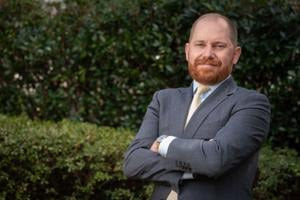
(D) Bob Trammell,  candidate for Attorney General 


You’ve got Democrats who come out of the Blue Dog, moderate, pragmatic lane. They’re credentialed. They’re experienced. They’re serious about governing. And they’re white.


And in a party where identity politics shapes a lot of the internal energy, that creates a collision nobody wants to say out loud.


So here’s the cold question:  

Can Democratic primary voters look past race and gender and judge candidates strictly on qualifications and ideas when the candidates come from inside their own party?


Not who’s better.  

Not who should win.  

Just whether voters can separate identity from evaluation.


Because the party talks a lot about representation and for good reason. But it also talks about experience, competence, and governing ability. Those values don’t always point in the same direction, and when they don’t, the room gets quiet.


Some voters lead with identity.  

Some lead with ideology.  

Some lead with resume.  

Some lead with electability.  

Some lead with who they trust to handle the job.


Those instincts don’t always line up. And when they don’t, the party has to decide which value actually comes first.


That’s the part nobody wants to say out loud.


Not because it’s complicated.  

But because it forces Democrats to confront the gap between what they preach and how they vote.


This cycle isn’t creating the tension.  

It’s just exposing it.

The Geoff Duncan Lane That’s There Whether People Admit It or Not

Every election cycle, Georgia Democrats find a new way to underestimate their own voters. And right now, the latest example is the knee‑jerk reaction some rank‑and‑file Democrats and party activists have toward the idea of Geoff Duncan becoming the nominee. You’d think the sky was falling the way some folks talk.


But here’s the part nobody wants to say out loud:  

It’s crazy to act like he can’t win the nomination.


Not because of polls. Not because of headlines.  

But because there’s a quiet lane of voters out there that nobody is accounting for and they’re not talking, posting, or raising their hands in public.


They’re watching.


They’re listening.


And they’re not interested in getting dragged by their friends, their group chats, or their county party Facebook warriors for saying Duncan’s name out loud.


That’s the part the activists keep missing.


Georgia has always had a “hidden vote” people who don’t show their cards until the last minute. People who don’t want the noise. People who don’t want the backlash. People who don’t want to argue with folks who think they speak for the entire party.


And this year, that quiet lane is bigger than folks want to admit.


Especially among Black men.


Not the loud ones. Not the ones who live on Twitter.  On Facebook. On any social media site. 

I’m talking about the men who work, raise families, mind their business, and vote their own mind, not the party line someone tries to hand them.


These voters don’t show up in early polling.  

They don’t show up in activist circles.  

They don’t show up in the “who’s trending” conversations.


But they show up on Election Day.


So when people dismiss Duncan like he’s a non‑factor, that’s not analysis, that’s wishful thinking. It’s easier to pretend the race is already decided than to acknowledge that Georgia voters don’t move the way party insiders think they do.


The truth is simple:  

There’s more happening under the surface than folks want to admit.


And ignoring that hidden vote has burned Democrats before.


It might burn them again.

Friday, May 1, 2026

In a Three‑Way Scramble, a Thurmond–Duncan Runoff Is on the Table.

Every election cycle, folks act shocked when Georgia politics throws a curveball. But if you’ve watched this state long enough from courthouse steps to farm‑bureau meetings you know the unexpected is usually hiding in plain sight. And the idea floating around political circles right now is one of those “sounds wild until you look at the numbers” situations: a Michael Thurmond–Geoff Duncan runoff.


On paper, it doesn’t look far‑fetched. Polling shows a crowded field with no one close to a majority and a mountain of undecided voters big enough to swing the whole race sideways. When nearly half the electorate is still sitting on the fence, anything can happen once folks finally tune in.


Some folks point out that both men have something that plays well in a fractured primary: long‑term familiarity with Georgia voters. Thurmond has decades of public service under his belt, and Duncan is known statewide from his time in office. In a three‑way race where name recognition and trust matter, that kind of resume can carry weight with undecided voters who are still kicking the tires.


Others note that each candidate speaks to a different slice of the electorate.... suburban moderates, longtime Democrats, rural voters who want steady hands, and people tired of political noise. When those lanes overlap in a crowded field, it’s not hard to imagine both men pulling enough support to land in the top two.


And then there’s the simple math: if no one hits 50%, Georgia sends the top two to a runoff. With the field as split as it is, a runoff isn’t just likely — it’s almost guaranteed. The only question is which two names rise above the pile once the undecideds break.


So when people say a Thurmond–Duncan runoff “doesn’t sound too crazy,” they’re not wrong. Georgia politics has a way of reminding everyone that nothing is locked in until the votes are counted. And with this many voters still making up their minds, the path to the final two is wide open.


Sunday, April 5, 2026

The Fellowship Hall Knows What the Party Won’t Admit: The Dark Horse Is in the Room

Every now and then, the church house gets quiet.  

Not because there’s nothing to say but because the truth about to be spoken needs room to land.


And on this Easter season, with Georgia politics shifting under our feet, some people are saying something that sounds a whole lot like a revival‑tent warning:


“Don’t write off Geoff Duncan in the Democratic Primary.”


Now, that’s not an endorsement.  

That’s not a prediction.  

That’s not a hallelujah chorus for any one candidate.


That’s simply what seasoned politicos and grassroots activists are whispering in pews, fellowship halls, and courthouse squares across this state.


Because Georgia is in a moment where the stakes are sky‑high, the margins are razor‑thin, and the old political hymns don’t hit like they used to.


Political watchers point out a few things worth paying attention to:


- He’s got statewide name recognition and that matters when ballots get crowded.  

- He complicates the usual partisan script and voters who don’t fit neatly into boxes often respond to candidates who don’t either.  

- He carries credibility with moderates and independents a lane Democrats can’t afford to ignore in a statewide race.  

- He brings a profile that could scramble assumptions and in Georgia, assumptions have been wrong before.  


Again, none of this guarantees anything.  

But it does mean the story isn’t as simple as some folks want it to be.


Georgia politics has a way of humbling the proud and lifting the unexpected.  

Ask anyone who’s watched this state long enough resurrection stories don’t start with the favorite. And that’s why some analysts say Democrats would be making a mistake to shrug off any candidate who brings a different coalition, a different profile, and a different kind of appeal.


Especially in a year when turnout, trust, and authenticity will matter more than slogans. This primary isn’t just a political contest, it’s a crossroads.  

And the church house knows a crossroads when it sees one.


Some folks


believe Geoff Duncan is the dark horse in this race.  

And in a year like this, with November looming large, they argue that ignoring a dark horse is how you end up praying for a miracle you didn’t have to need.

Tuesday, October 7, 2025

Which Democratic Duo have that November 2026 Appeal?

Let’s play this out strategically—because this isn’t just a game, it’s a messaging exercise with real implications for coalition-building, turnout, and narrative control.


Brown & Thurmond
Ticket 1: Michael Thurmond – LeMario Brown

- Appeal: This ticket screams competence meets community. Thurmond brings deep experience, historical resonance, and credibility with Black voters, labor, and education advocates. Pairing him with LeMario Brown adds youthful energy, rural reach, and a fresh voice for working-class Georgians.

- Resonance: Strong with Black voters, union households, educators, and pragmatic progressives. It’s a ticket that feels earned, not manufactured. It could also peel off moderate independents who respect Thurmond’s record.


Ticket 2: Geoff Duncan – LeMario Brown

Duncan & Brown
- Appeal: This is your unity narrative. Duncan offers a post-Trump Republican brand—business-friendly, anti-extremist, and palatable to suburban voters. LeMario balances the ticket with grassroots credibility and a bridge to rural and Black communities.

- Resonance: Could attract disaffected Republicans, independents, and moderate Democrats. It’s a coalition ticket that says, “We’re done with chaos. Let’s govern.”


Strategic Take:

- Thurmond–Brown is the values-driven ticket—ideal for energizing the base and reclaiming rural Black voters.

- Duncan–Brown is the coalition ticket—ideal for flipping suburban moderates and sending a message of bipartisan sanity.

Thurmond–Brown builds durable infrastructure while Duncan–Brown might be the shockwave that resets the board. Also let's not forget, Brown is also a serious candidate for Georgia Agriculture Commissioner as well.


Keisha Lance Bottoms – Josh McLaurin
- Appeal: Urban executive meets suburban legal mind. Keisha brings national name ID, executive experience, and strong ties to Black voters and women. McLaurin adds credibility with moderates, legal chops, and suburban reach.

- Resonance: Strong in metro Atlanta, with potential to energize Black women, urban progressives, and swing suburban voters. But Keisha’s national profile may polarize some rural or moderate voters unless paired with strong economic messaging.


Ticket 3: Jason Esteves – LeMario Brown

- Appeal: Youthful, forward-looking, coalition-building. Esteves brings education and Latino outreach; LeMario brings rural credibility, union resonance, and Black working-class appeal.

- Resonance: This is a next-gen ticket—ideal for energizing younger voters, rural Black communities, and multicultural coalitions. It’s fresh but may need more gravitas to reassure older or institutional voters.

Ticket 4: Derrick Jackson – Josh McLaurin

- Appeal: Legislative experience meets legal reformer. Jackson brings union ties and rural reach; McLaurin adds suburban polish and legal credibility.

- Resonance: Solid with working-class voters, union households, and suburban moderates. It’s pragmatic but may lack the star power or emotional spark needed to drive turnout in a high-stakes general.

 Ticket 5: Michael Thurmond – J.B. Powell

- Appeal Legacy meets rural roots. Thurmond is a respected elder statesman with deep ties to education, labor, and Black voters. Powell brings rural Georgia credibility and crossover appeal.

- Resonance: This is the stability ticket—ideal for older voters, union households, and rural Democrats. It’s dignified, experienced, and could quietly rebuild trust in forgotten counties.


Ticket 6; Geoff Duncan – Sonya Halpern

Appeal: This is a coalition ticket that says: “We’re done with chaos. Let’s govern.” Duncan brings a business-minded, anti-Trump Republican brand that appeals to suburban moderates and independents. Halpern adds cultural fluency, legislative experience, and deep ties to Atlanta’s civic and arts communities.

Resonance:

- Suburban moderates: Duncan’s rejection of extremism and focus on economic stability plays well here.
- Black women and urban voters: Halpern’s presence signals respect, representation, and cultural investment.
- Business and civic leaders: This ticket feels like a return to sanity—governance over grievance.

Potential Strengths:

- Bridges the urban–suburban divide.
- Signals competence, calm, and coalition-building.
- Could peel off disaffected Republicans and energize pragmatic Democrats.

Challenges:

- May need stronger rural messaging and labor credibility to reach working-class voters.
- Could be seen as elite or institutional unless paired with bread-and-butter economic messaging.

Strategic Take:

This ticket is built for general election viability, especially in a Georgia that’s tired of whiplash politics. It’s not flashy—it’s functional. If paired with a strong economic justice platform and rural outreach, it could be a sleeper powerhouse.


To sum it all up:

- Most Appealing to Energize the Base: Bottoms–McLaurin or Esteves–Brown  
  Urban, youth, multicultural, progressive energy.

- Most Appealing to Flip Moderates/Suburbs: Jackson–McLaurin or Duncam-Halpern  
  Legal reform, legislative pragmatism, suburban reach.

- Most Appealing to Rebuild Rural Trust: Thurmond–Powell or Duncan or Brown or Thurmond-Brown
  Legacy, labor, rural dignity, and quiet power.


Turnout + coalition-building, Duncan-Brown, however Esteves–Brown might be the sleeper hit.  
Stability + rural repair, Thurmond–Powell is the quiet powerhouse.  
Suburban swing + national signal, Bottoms–McLaurin brings the heat.

Sunday, June 19, 2022

It's Charlie Bailey Time!

On Tuesday, voter will return to the polls to vote in a pair of runoff elections to determine who will go on to the General Election.

One such race is for Lt. Governor where Charlie Bailey who was a 2018 candidate for Attorney General will face off against Kwanza Hall, who is a former Atlanta City Councilman and Congressman.

Voters should vote for Charlie Bailey next Tuesday. He will be a strong fighter for Rural Georgia whether you live in Charlton County, Montgomery County, Polk County or Union County.

Charlie will first address the symptoms of a over regulated, over taxed economic base and it effect on the taxpayer. Second, he understands and respect that Rural Georgia is Georgia too! (He is a native of Harris County in Western Georgia). Third he will ensure no more rural hospitals will close and to finally spearheard much needed medicaid expansion to rural areas of our state that are in desperate need of healthcare services. And finally, he will address and try to come up with solutions to the three f's.... Fuel, Food, and Fertilizer. Our Farmers and Agriculture Industry rely tremendously on diesel a
nd fertilizer, and voters feel the pinch in their wallet and pocketbooks when go to the store or put gas in their vehicles.

Kwanza Hall, his opponent is a nice guy with many accomplishments and if he wins, I'd take a long look at supporting him, but right now Georgians need a Charlie Bailey as Lt. Governor to bring all parties together to continue to move Georgia forward.

Charlie has been endorsed by former Atlanta Mayor Shirley Franklin, former Governor Roy Barnes, Lt. Governor Mark Taylor, Congressman Hank Johnson.


Vote Charlie Bailey for Lt. Governor on Tuesday June 21.

These Democratic Women Are Rising Stars and Their Futures are Bright

  Former State Senator and potential '26 gubernatorial candidate Jen Jordan Tift County Board of Education member Pat McKinnon State Rep...